News

The design of the pantry should pay attention to the following aspects:
The pantry should be located in the transitional zone between the dining room and the kitchen. It should be convenient for grabbing and placing food trays, for notifying the order taker, and for communicating information such as starting and stopping the serving of dishes.
2. A dual-door and dual-passage system is adopted between the kitchen and the dining room. The installation of two doors between the kitchen and the dining room truly serves to isolate smoke, noise, and temperature. The overlapping arrangement of two doors facing the same direction not only achieves the "three isolations" but also blocks the guests' direct view into the kitchen, effectively solving the problem of using screens in some restaurants.
3. The pantry should have sufficient space and equipment.
Emphasis should be placed on ventilation and smoke extraction. Some restaurants emit a mixture of smoke, alcohol, cooking fumes, and various dish scents upon entering, and the issue stems from inadequate ventilation. Hotels must pay special attention to this during professional equipment design, as insufficient negative pressure in the kitchen is the primary cause of this problem. Increasing negative pressure can prevent the escape of cooking fumes and dish scents, and also avoid cross-contamination of ventilation throughout the hotel. Additionally, dividing the restaurant into smoking and non-smoking areas can minimize the impact of smoke on non-smoking guests. Moreover, air outlets should not be directly facing guests or dining tables, as this can affect guest comfort and the quality of dishes.
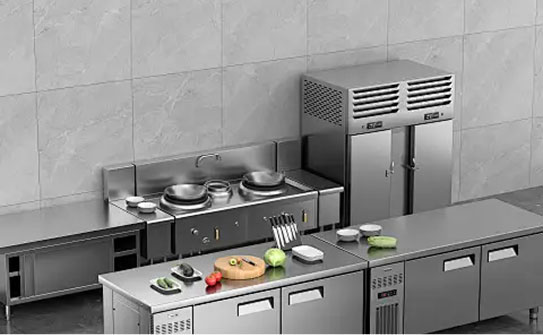
Hotel kitchenware, catering kitchenware, western cuisine kitchenware, Chinese cuisine kitchenware, stainless steel kitchenware, and fume purification equipment
Emphasis should be placed on hotel lighting design. A dining environment that is too bright or too dark can make guests feel uncomfortable. Accent lighting on the tabletop can effectively enhance appetite, while other areas should be relatively darker. Artwork can be highlighted with lighting, and the combination of bright and dark lighting can create a layered atmosphere throughout the restaurant. Additionally, hotel design should avoid the use of colored light sources, as they can make the hotel appear tacky and can also make guests feel irritated.